She Worms Composting
Redeeming Soil…Naturally
Mission
We believe healthy soil starts at home. She Worms Composting empowers growers, educators, and changemakers with the practical knowledge and living tools to harness the power of vermicomposting, turning everyday waste into something the earth truly needs.
- Did you know that food waste is the largest contributor of solid waste sent to incinerators and landfills?
- Did you know that your 30% of the waste your household generates is food waste?
- Did you know, Composting is one of six ways to address food waste?
- Did you know that chemical fertilization of soil and plants uses artificial or synthetic products?
- Composting is one of the best ways of recycling food waste
- Composting reduces the amount of food waste sent to incinerators and landfills
- Composting reduces how much waste your household generates
- Composting is an organic and natural fertilizer for both soil and plants
Our Story — It Started With Grass Clippings
In 2020, my family and I left New York City for Connecticut; trading apartment life for something we’d never had before: a backyard.
Not long after moving in, we hired a landscaper to cut the lawn. When he finished, the yard was covered in grass clippings. To me, the job felt unfinished.
“Are you coming back to rake these?” I asked.
“I can,” he replied, “but it’ll cost extra to haul them to the dump… or you could just compost them.”
Compost them?
I had no idea what that really meant but I knew I didn’t want to pay extra. So I went down the rabbit hole. Or, as I like to call it now, the wormhole.
Curiosity Turned Into Passion
I learned that compost is simply nature’s way of recycling, the controlled breakdown of organic materials like yard waste, food scraps, and manure into nutrient-rich soil. I bought my first backyard compost bin and started with those very same grass clippings.
One bin became two. Two became a daily fascination. Somewhere in that process, curiosity quietly turned into calling.
Stepping Out of the Boat
In 2023, I stepped away from full-time work to lean fully into composting. With support from the Connecticut Women’s Business Development Council, I launched She Lawns Compost with one mission: to help people create compost simply, effectively, and confidently at home.
The Moment That Changed Everything
I was introduced to vermicomposting through a community composting workshop. The workshop facilitator – Monique Bosch- who is now one of my mentors, explained vermicomposting as the practice of using worms to break down organic waste. I didn’t just leave with new knowledge. I left with a worm bin. (Won it in the raffle.)
What started as a lucky win became a year of experimentation and wonder. Watching worms transform food scraps into living soil felt faster, more efficient, and deeply aligned with my vision.
She Lawns Compost evolved into She Worms Composting.
Today
Today, She Worms Composting exists to empower growers, families, schools, and organizations to reduce waste naturally, build healthy soil, grow stronger plants, and reconnect with the simplest systems nature offers.
All thanks to a pile of grass clippings that refused to be thrown away.
Initially, I thought composing and food scraping would be a huge undertaking. I was pleasantly surprised to find it was less labor intensive than I thought.
I was introduced to the concept by Racquel Anderson Smith as she embarked on her compositing business venture. I had heard periodically about it from the City of Stamford’s recycling program.
After cooking Thanksgiving 2023 I realized how much food scraps I accumulated. The lightbulb went off. This is where food scrapping could be impactful. I called SheWorms Composting to discuss. Racquel provided me w/ a countertop and outdoor collection bins. I started with onion peels, fruit & vegetable skins, tea bags & other compostable food scraps.
After a week or two of conscious food scrapping, it was happening consistently.
I went from a small bit to ten pounds of scraps that was then composted by She Worms Composting. Just over a year in, I’m still collecting food scraps. My trash doesn’t smell as much and I’m contributing to less methane gas creation.
Huge thanks to Racquel, at She Worms Composting!
My money tree house plant developed yellow leaves. I added the She Worms compost on top of the soil in the pot and placed it in the rain for a short time. After about two weeks, my husband commented on how the plant looked healthy! It's then I remembered that I had fed it with She Worms Compost. It really works! Was not sure what to expect and it exceeded my expectations!
What is Vermicomposting?
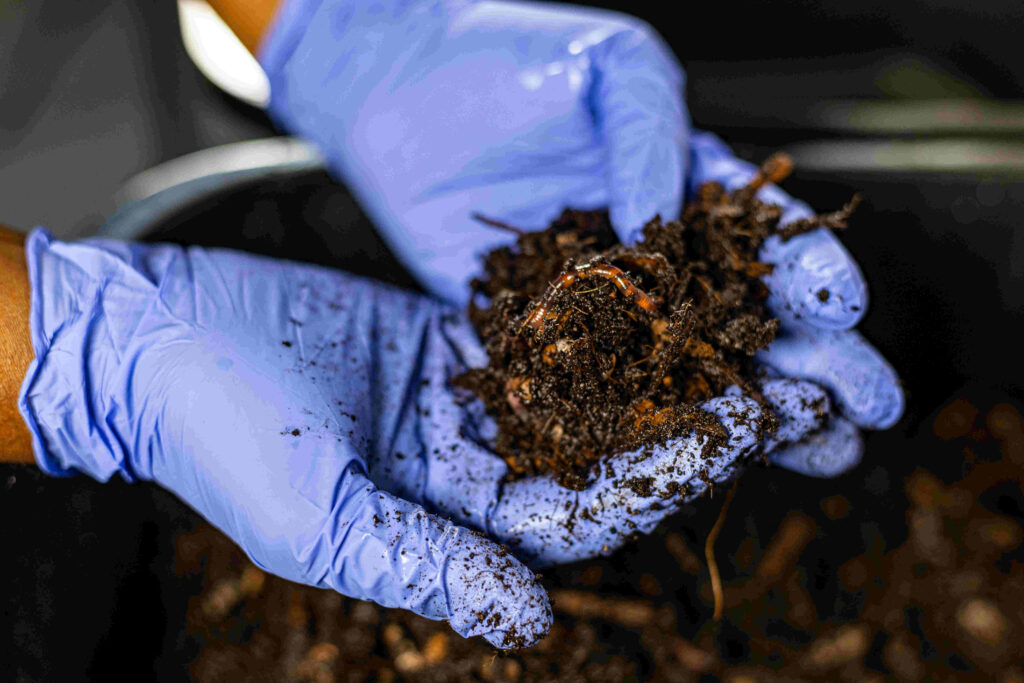
Vermicomposting is the use of earthworms to break down organic waste into one of nature’s most powerful soil amendments.
The Latin root Vermi simply means worms. When earthworms digest food scraps and organic material, what comes out the other side is vermicompost; a rich, microbial soil conditioner packed with nutrients your plants will love.
Refine it further, and you get worm castings: the purest, most potent form of natural soil boosters available.
Why VermiCompost?
- Vermicomposting is a sustainable and natural method of recycling food waste.
- Vermicomposting diverts solid waste from incinerators and landfills.
- Vermicomposting creates a rich soil amendment packed with beneficial nutrients and microorganisms for plants and soil.
You already know food waste is a problem. Vermicomposting is one of the simplest, most satisfying things you can do about it, right from your kitchen counter.
Key Benefits
It Diverts Waste From Landfills
Food waste is the single largest contributor to solid waste in landfills and incinerators. Up to 30% of what your household throws away is compostable. Vermicomposting puts that material to work instead.
It Builds Healthy Soil
Worm castings aren’t just compost, they’re a living soil amendment packed with beneficial microorganisms, plant-available nutrients, and minerals that synthetic fertilizers simply can’t replicate.
It Fits Your Life
No backyard required. A worm bin can live in your kitchen, basement, classroom, or garage. It’s quiet, and low-maintenance.
Everything we sell is locally produced in Connecticut, sustainably raised, thoughtfully packaged, and designed to make vermicomposting work for you.
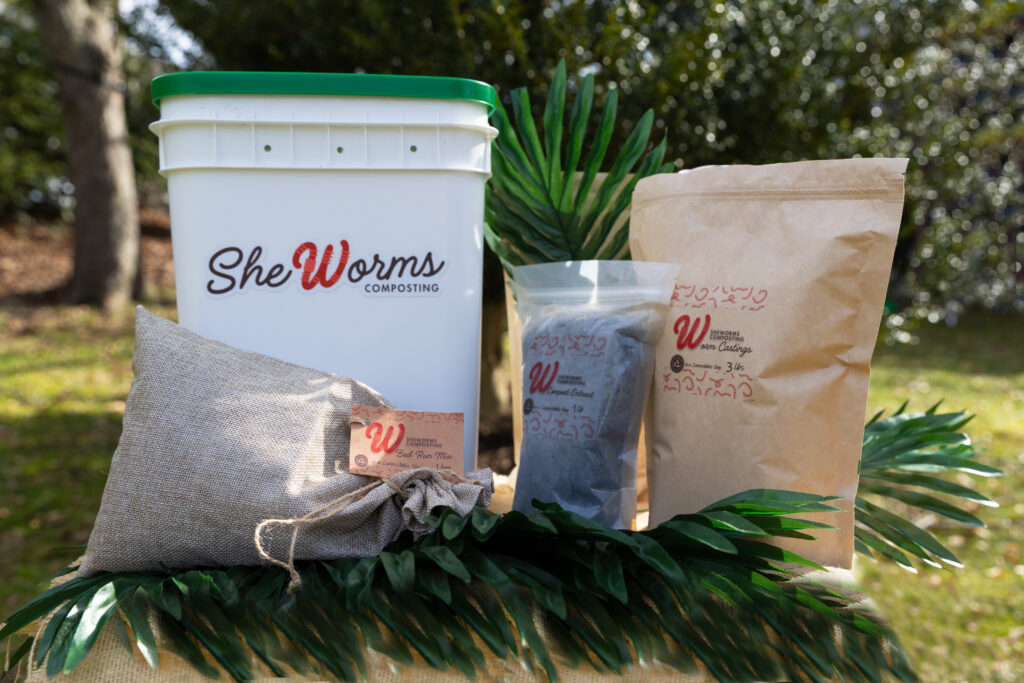
Worm Compost Extract (1lb)
Think of this as a shot of espresso for your soil. Our concentrated worm castings come in a reusable tea bag that you steep in water to create a compost extract, then water or spray directly onto your plants or garden beds.
- Sustainably produced worm castings from Connecticut
- Packaged in a compostable, reusable tea bag
- Use as a liquid drench or foliar spray
- Instructions included
Worm Castings (2 & 3 lbs)
$23
Our pure worm castings are the gold standard of natural soil amendment; earthy, odorless, and packed with nutrients. Use them to top-dress your garden, mix into seed starting and potting soil, or brew your own compost extract/ tea.
- Locally produced in Connecticut
- Apply as top dressing, mix into soil, or brew extract/ tea
- Packaged in a compostable bag
- Instructions included
Red Wiggler (Eisenia Fetida)
$60/ bag
Ready to start your own worm bin? These sustainably bred red wigglers come in an activated bed-run mix. Bedding is enriched with worm compost extract (for microbes and minerals) plus carbon material, so your worms arrive healthy and ready to work.
- Purebred Eisenia Fetida, bred in Connecticut
- Bed-run mix activated with compost extract
- Can be added directly to compost pile, worm bin, or garden beds
- Shipped April through September only
- Packaged in a compostable bag
Bucket Offer
$85
The perfect soil kit for serious gardeners. Get everything you need to nourish your garden from the ground up – delivered right to your door.
- 4 gallons of premium worm castings
- Reusable tea bag for brewing worm extract
- Application instructions included
- FREE delivery in Fairfield County, CT
- Return your bucket for a discount on your next refill
SOIL HEALTH & BIOLOGY
(Microscopic analysis of your soil’s health and biology profile)
Consultation, Seminars, + Workshops
Whether you’re a curious beginner, a classroom teacher, or a community organization looking to start a composting program – we’ll meet you where you are.
- 101 Workshops for all ages and settings
- Available for community farms, groups, schools, and libraries
- Tailored curriculum available
Email us at info@shewormscomposting.com to book your session.
Sustainability Commitment
Certifications & Partnerships:
Connecticut National Organic Farmers Association (CTNOFA)
UCONN Master Composter
FAQs
Have questions? Good. That’s how it starts. Here are the answers to the ones we hear most – from total beginners to seasoned composters.
What is vermicomposting?
Vermicomposting is the process of using composting worms (typically red wigglers) to break down food scraps and organic material into nutrient-rich worm castings — a natural soil amendment that improves plant growth, soil health, and moisture retention.
Does a worm bin smell?
No — a healthy worm bin smells earthy, like fresh soil.
Bad odors usually mean:
- Too much food added at once
- Excess moisture
- Not enough carbon materials (paper/cardboard)
These are easy to fix and part of the learning process.
Can I keep a worm bin indoors?
Yes! Worm bins are perfect for:
- Kitchens
- Basements
- Garages
- Apartments
- Classrooms
They take up little space and operate quietly with no mess when maintained properly.
What can I feed composting worms?
✅ Fruit & uncooked vegetable scraps
✅ Animal manure
✅ Tea bags (remove tags and plastic-free)
✅ Crushed eggshells
✅ Small amounts of bread or grains
🚫 Avoid:
- Meat or fish
- Dairy
- Oily foods
- Large amounts of citrus
- Spicy or salty foods
Do worms escape from the bin?
Healthy worms stay where food and moisture are ideal. If worms try to escape, it usually means:
- Bin is too wet or too dry
- Food is rotting improperly
- Environment is too hot or cold
This is rare and easily corrected.
How much maintenance does a worm bin need?
Very little. Typical care:
- Feed once or twice weekly (bin size/ worm population dependent)
- Add bedding as needed
- Harvest castings every few weeks or months
Most people spend 5–10 minutes per week maintaining their bin depending on bin size and how many bins you have.
How long does it take to make worm compost?
You’ll start seeing results in 4–8 weeks, with full harvest typically in 2–4 months, depending on feeding amount and bin size.
What are worm castings used for?
Worm castings can be used to:
- Enrich garden soil
- Boost houseplant growth
- Start seedlings
- Make compost tea/extract
- Improve lawn health
Is vermicomposting hard for beginners?
Not at all. Vermicomposting is one of the simplest and fastest composting methods once you understand the basics.
With the right setup and guidance, most beginners succeed quickly.
How many worms do I need to start?
A typical starter bin uses ½–1 pound of worms (about 500–1,000 worms).
This can process roughly 1½ of their body weight,or ½ pound of food scraps per day once established.
What temperature is best for worms?
Worms thrive between 55°F and 85°F.
They slow down in cold temperatures and can die in extreme heat, which is why indoor bins work so well in Connecticut (or New England) winters.
Do you offer worm bins?
Not at the moment. Maybe in the future we will. Right now She Worms Composting offers:
- Educational workshops (homes, schools, businesses)
- Compost consulting & setup guidance
- Collaborated Soil health Education